

Why Your Tire Pressure Light Comes On Every Cold Morning (And When It’s Actually Serious)
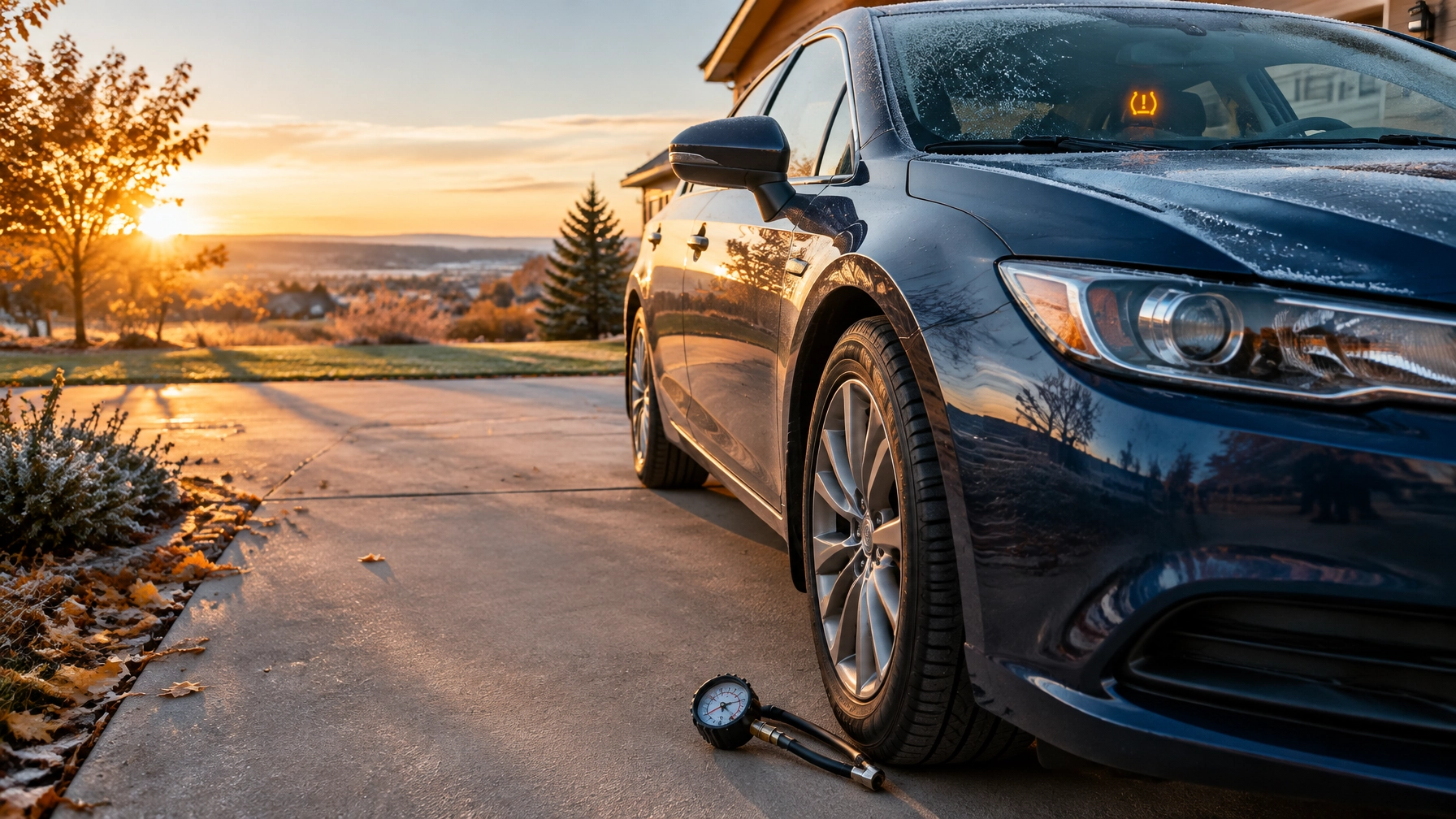
You step outside for your early Sioux Falls commute, coffee in hand, and notice a little amber horseshoe-shaped light glowing on the dashboard. Your stomach drops. Did you pick up a nail? Is a tire about to go flat? Or is your car simply reacting to the first cold morning of the season?
Every autumn, drivers face the same frustrating question: should you panic, add air, or keep driving and hope the light disappears?
The good news is that cold weather often explains a tire pressure warning. But the warning should never be ignored. A temperature-related pressure drop can affect safety, fuel economy, and tread life, and sometimes the light is pointing to a genuine leak or damaged tire component. Here’s how to tell the difference and what to do next.
Why the tire pressure light appears when temperatures drop
Air behaves differently as it gets colder. When the temperature falls, the air inside your tires contracts. That means it takes up slightly less space and exerts less pressure against the inside of the tire.
The widely used rule of thumb is simple: tire pressure drops by about 1 PSI for every 10°F decrease in temperature.
For example, imagine your tires were correctly inflated on a mild 60°F afternoon. If the temperature falls to 20°F overnight, each tire could lose roughly 4 PSI by morning. That may be enough to trigger the Tire Pressure Monitoring System, commonly called TPMS.
The exact change varies by tire, vehicle, and weather conditions, but the principle is reliable. A sharp autumn cold snap can push a tire that was already slightly low below the warning threshold.
That is why the light may appear after the first frost, even though nothing dramatic happened overnight. Your tires did not necessarily develop a sudden problem; the air inside them simply responded to the cold.

What the TPMS light is, and is not, telling you
Your TPMS is a helpful early-warning system, but it is not a complete tire inspection.
The system monitors pressure through sensors inside or attached to the wheels. When pressure falls significantly below the vehicle manufacturer’s recommendation, the warning light comes on. In many vehicles, the system is designed to alert you when pressure is approximately 25% below the recommended cold inflation pressure.
That does not mean the light tells you the exact PSI in every tire. It also cannot always identify the cause of the pressure loss. Think of TPMS as a smoke alarm: it tells you something needs attention, but you still need to investigate what is happening.
Your correct pressure is listed on the sticker inside the driver’s door frame or in your owner’s manual. Do not use the maximum pressure printed on the tire sidewall. That number describes the tire’s maximum allowable pressure, not necessarily the right pressure for your vehicle.
How to check whether cold weather is the only cause
You can perform a useful first check at home without immediately visiting a shop.
1. Check all four tires when they are cold
Use a reliable tire-pressure gauge before driving, ideally after the vehicle has been parked for at least three hours. Early morning is usually the best time.
Check each tire, not just the one that looks low, and compare the readings with the door-jamb recommendation. If all four tires are down by a similar amount after a major temperature drop, cold weather is likely the main reason.
Add air until each tire reaches the recommended cold PSI. If you have a full-size spare, check it as well. Some temporary spare tires have separate pressure requirements, and many TPMS systems do not monitor the spare.
2. Look for visible damage
While checking pressure, walk around the vehicle and inspect the tires for:
- A nail, screw, or piece of metal in the tread
- Cracks, bulges, or cuts in the sidewall
- A valve stem that appears bent, cracked, or damaged
- A wheel that may have been dented by a pothole
- One tire sitting noticeably lower than the others
Do not remove a nail or screw yourself. It may be slowing the leak, and removing it can make the tire lose air quickly.
3. Recheck the pressure later
If you inflate the tires and the TPMS light goes off after driving, monitor the pressure over the next few days. A tire that remains stable is more likely to have been affected by temperature.
If one tire drops again, especially by several PSI overnight, you probably have a leak rather than a simple cold-weather change.
A slow leak can come from a puncture, a poor seal where the tire meets the wheel, corrosion around the rim, or a damaged valve stem. These problems may not be obvious by looking at the tire, but they can leave you with a dangerously underinflated tire later in the week.
When the warning points to a real problem
Some signs deserve more attention than a light that appears once after a cold snap.
One tire is much lower than the others
Cold weather usually affects all four tires in a similar way. If one tire is significantly lower, suspect a puncture, valve-stem leak, wheel damage, or another problem.
The light returns after you add air
If you inflate the tire to the correct PSI and the light comes back within hours or days, do not keep topping it off indefinitely. The tire needs to be inspected for the source of the leak.
The tire looks flat or the vehicle feels unstable
Do not continue driving on a visibly soft or damaged tire. Underinflation changes the way the tire contacts the road and can create excess heat inside the sidewall. That can increase the risk of tire failure, especially at highway speeds.
If your steering feels heavy, the vehicle pulls, or you hear thumping, find a safe place to stop. Your tires are your vehicle’s only contact with the road: your most important companions in snow, rain, and icy Sioux Falls traffic.
The TPMS light flashes before staying on
On many vehicles, a TPMS light that flashes for a period of time and then stays illuminated can indicate a sensor or system fault rather than low pressure alone. The exact behavior varies by manufacturer, so check your owner’s manual.
A failing sensor may have a dead battery, damaged electronics, or trouble communicating with the vehicle. Adding air will not solve that issue. A technician can test the system and identify whether the problem is the sensor, its programming, or another component.
Why low tire pressure matters beyond the dashboard
It can be tempting to treat a tire pressure warning as a minor seasonal annoyance. The truth lies somewhere in between: a small temperature-related drop may be easy to correct, but driving for weeks with low pressure can create real problems.
Safety
Underinflated tires do not respond as precisely to steering input. They can reduce traction, increase stopping distances, and feel less stable on wet, icy, or snow-covered roads.
That matters in Sioux Falls, where a dry autumn commute can quickly become a slick drive after freezing rain or an early storm.
Fuel economy
A soft tire creates more rolling resistance. Your engine has to work harder to move the vehicle forward, which can reduce fuel economy. You may not notice the difference on one trip, but the added drag can increase fuel use over time.
Tread wear
Low pressure can cause the outer edges of a tire to wear faster than the center. Uneven wear shortens tire life and reduces the amount of healthy tread available when winter roads become slippery.
Proper inflation does not replace rotation, inspection, or alignment, but it is one of the simplest ways to protect your tires.
How Sioux Falls freeze-thaw weather can make things worse
Cold mornings are only part of the local challenge. Sioux Falls roads also deal with repeated freeze-thaw cycles.
Water enters small cracks in pavement during a thaw. When temperatures drop, that water freezes and expands, weakening the road surface. As traffic passes over the damaged area, potholes can form or grow quickly.
A pothole impact can damage a tire, bend a wheel, disturb the tire bead seal, or harm the valve stem. Sometimes the damage causes an immediate flat. Other times it creates a slow leak that becomes noticeable only after the next cold morning.
If your tire pressure warning appeared after a hard pothole impact, do not assume the weather is solely responsible. If your vehicle begins pulling, the steering wheel sits crooked, or you notice unusual wear, review our guide to wheel alignment and Sioux Falls pothole damage and have the tire and wheel checked.
When to call a local professional
You can safely handle a basic pressure check and inflation at home. But schedule an inspection if:
- One tire repeatedly loses pressure
- You see a puncture, bulge, crack, or wheel damage
- The TPMS light flashes or will not reset
- The vehicle feels unstable or pulls to one side
- The warning appears after a pothole impact
- You are unsure whether the tire is safe to drive on
Motor Solution provides tire services in Sioux Falls for all makes and models. Our ASE-certified technicians can inspect the tire, wheel, valve stem, and TPMS system instead of guessing at the cause.
If the warning is connected to a broader electronic issue, our vehicle diagnostics Sioux Falls guide explains why a warning code is a clue, not always the complete answer. A trusted mechanic Sioux Falls SD drivers rely on can give you clear recommendations and explain what needs attention now.
Keep the first cold morning from becoming a winter headache
The first tire pressure light of autumn is often a reminder, not a reason to panic. Check your tires cold, use the PSI on the driver’s door sticker, and monitor the readings after you add air.
But do not ignore a warning that returns, affects only one tire, or appears alongside handling changes. A quick inspection can protect your safety, fuel budget, and tire investment before winter puts even more demands on your vehicle.
As the next step in our Sioux Falls winter-readiness series, this simple check builds on our First Frost vehicle checklist. Whether you are preparing for school drop-offs, an early commute, or snow-covered weekend roads, a little attention now can bring back the peace of mind you deserve.
Schedule an appointment with Motor Solution or contact our local auto repair shop for straightforward advice and dependable tire care.
Related Posts

First Frost Is Coming: 7 Things Sioux Falls Drivers Should Do to Their Car Before Winter Arrives
You step outside for an early commute and notice it: the windshield is lightly frosted, the air has that sharp, cold bite, and your car takes an extra second to start. It may still feel like fall in Sioux Falls,…


Trading It In or Buying New? A Sioux Falls Buyer’s Guide to Making the Smart Used Car Decision
You pull into the driveway after another long day in Sioux Falls, and your current vehicle greets you with a warning light, a strange vibration, or one more repair estimate than you expected. The idea of replacing it can feel…

The Pothole Survival Guide: Why Sioux Falls Roads Are Wrecking Your Wheel Alignment
You’re driving down 41st Street, maybe humming along to the radio or thinking about what’s for dinner, when it happens: that heart-skipping thud. It’s a sound every Sioux Falls driver knows too well. It’s the sound of your car meeting…